
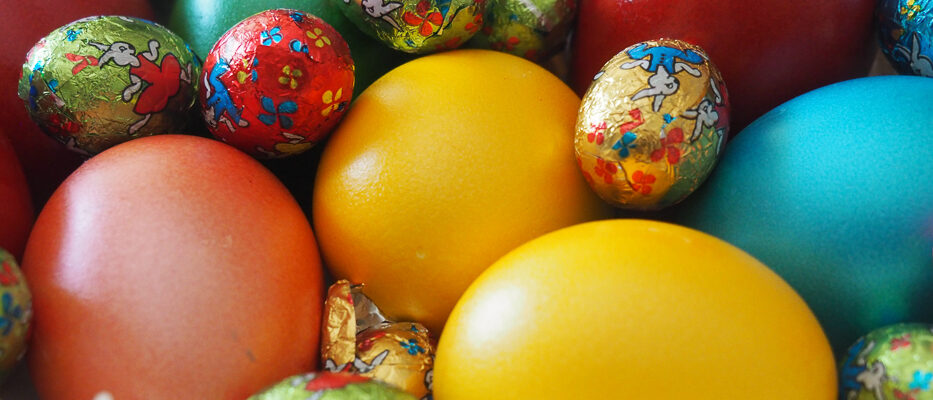
The tradition of dyeing eggs is an essential ritual of Greek Orthodox faith—one that is embraced by most households across the country each year. This wonderful tradition, like most in Greece, carries with it centuries of symbolism and devotion.
On Holy Thursday, “Megali Pempti,” families gather around the kitchen table to transform simple eggs into one of Easter’s most meaningful symbols. Let’s take a closer look at one of Greece’s special traditions.
The Meaning Behind the Red Egg
If you’ve ever wondered why the eggs are dyed red, there is a symbolic meaning behind this tradition. The color red represents the blood of Christ, shed during the Crucifixion. The egg itself symbolizes the sealed tomb—its hard shell enclosing new life within. Once the egg cracks, it mirrors the moment of Resurrection, when life emerged from what once seemed final.
This powerful symbolism makes the egg an enduring emblem of Easter—of sacrifice, renewal, and the promise of eternal life.
The Stories That Brought Color to the Egg
Like most traditions rooted in faith, there are stories passed down through generations about the red egg.
One of the most beloved centers on Mary Magdalene, who, after witnessing the Resurrection, carried eggs in a basket that miraculously turned red.
Another tells of her standing before the Roman emperor, declaring that Christ had risen. He challenged her, saying he would believe her only if the eggs beside him turned red—and in that very moment, they did.
There are also more tender versions. The Virgin Mary, offering eggs to the guards at the Cross, her tears falling upon them—transforming them red as a silent plea for mercy.
 Across each story, the message remains beautifully consistent: faith has the power to transform the ordinary into something sacred.
Why Are the Eggs Dyed on Holy Thursday?
In Greece, the tradition of dyeing eggs takes place on Holy Thursday, the day of the Last Supper.
It is the moment when Christ shared bread and wine—symbols of His body and blood—before His sacrifice. Dyeing the eggs on this day becomes an act of remembrance and preparation for the Resurrection.
The eggs are then set aside, sometimes covered with a cloth, and revealed on Easter Sunday. Some families take a single egg to church on Holy Saturday night, ready to crack it at the first joyful proclamation:
“Christos Anesti” — Christ is Risen.
The Tradition of Dyeing Eggs Across Greece
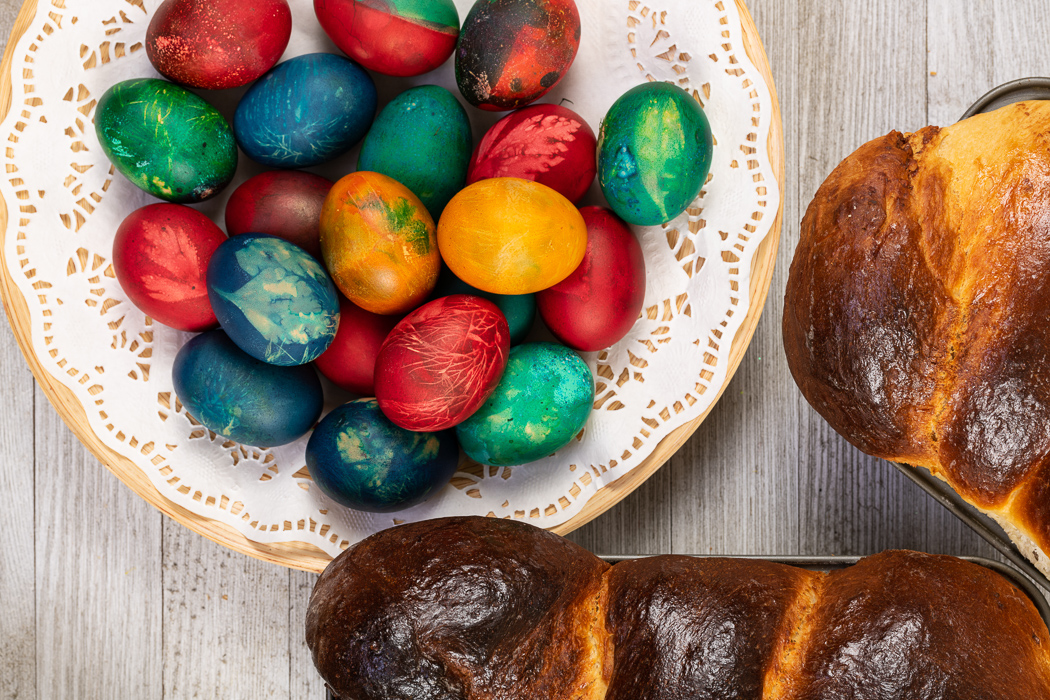
While red remains the dominant color, the techniques used across Greece vary—each shaped by nature, creativity, and heritage.

Natural Red with Rizari (Madder Root)
A time-honored method, especially in Crete and the Peloponnese, where the root of Rubia tinctorum is boiled with vinegar to create a deep, natural red.
Onion Skins: The Rustic Classic
Many households use dried onion skins to create warm, earthy tones. For greater intensity, they wrap the eggs in the skins before boiling.
Leaves & Flowers: Nature’s Imprint
Leaves and flowers—parsley, clover, daisies—are placed on the egg, wrapped tightly, and dyed. Once unwrapped, they leave behind delicate, intricate patterns.
Wax Decoration (“Perdikes”)
In Northern Greece, artisans use melted wax to draw detailed designs before dyeing the eggs, allowing the wax to resist the color and reveal the pattern beneath.
Marbled Eggs
After dyeing, the process is repeated by wrapping the eggs in onion skins, adding vinegar, and adding a touch of oil. This process creates a beautifully marbled effect.
Threads and Color Play
In Crete, before boiling eggs are wrapped in colorful threads. The result is vibrant and unexpected patterns.
Natural Dyes from the Kitchen
Beetroot for pink and deep red tones
Turmeric for bright yellow
Red cabbage for blue and purple shades
Spinach or nettles for soft greens
All these techniques connect deeply to the land and show us how people use even the simplest ingredients as tools of tradition.
Tsougrisma: The Ritual of Cracking and Luck
On Easter Sunday, the eggs take center stage in the joyful tradition known as tsougrisma.
 Two people each hold a red egg and gently tap them together. One says “Christos Anesti,” the other replies “Alithos Anesti,” and the ritual begins. The person whose egg remains unbroken is said to carry good luck for the year ahead. This simple gesture captures the true essence of Greek Easter.
The dyeing of eggs in Greece is more than a custom; it’s a beautiful tradition that lives on in every household. We hope that you get to experience this wonderful tradition in person.