
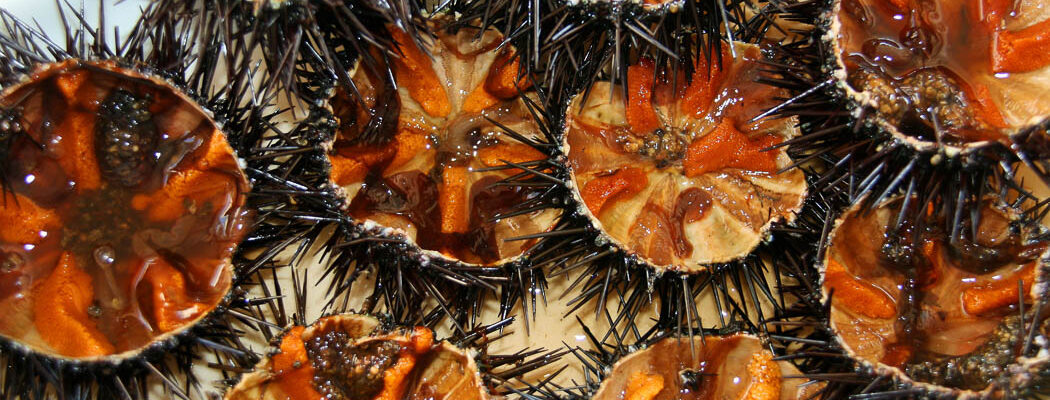
The sea urchin, known in Greece as achinos, guards itself with sharp spines and hides among rocky shores, warning anyone who comes too close to keep a distance. Beyond its defensive exterior is one of the Mediterranean’s most prized delicacies—a taste so fresh, briny, and pure that it almost feels like capturing the essence of the sea in a single bite.
Anyone who spent their summers growing up in Greece will recall it as a painful childhood memory of stepping barefoot on a rocky beach. For others, it is a summer delicacy, opened fresh by the sea and enjoyed with freshly squeezed lemon, bread, and that quiet sense of celebration.
The sea urchin, however, is in fact more than a delicacy. It serves as a marine gardener, a scientific model and even a symbol of clean waters.
What Is a Sea Urchin?
Sea urchins belong to the class Echinoidea, within the larger family of echinoderms, which also includes starfish, sea cucumbers and sand dollars.
Their name comes from the ancient Greek word ekhinos, meaning both “hedgehog” and “sea urchin.” It is easy to see why. Like a tiny underwater hedgehog, the sea urchin protects itself with movable spines arranged around a hard shell, known as the test.
Underneath the spines, the sea urchin has an extraordinary body structure. It moves slowly using hundreds of tiny tube feet and feeds with a complex jaw system traditionally known as Aristotle’s lantern. Aristotle described sea urchins in antiquity, making them among the marine creatures most closely connected to the early history of natural science.
Different Species of Sea Urchins
There are hundreds of sea urchin species around the world, from tropical reefs to polar seas and deep ocean floors. Not all are edible, and not all have the same ecological role.
In the Mediterranean, several species are especially important.
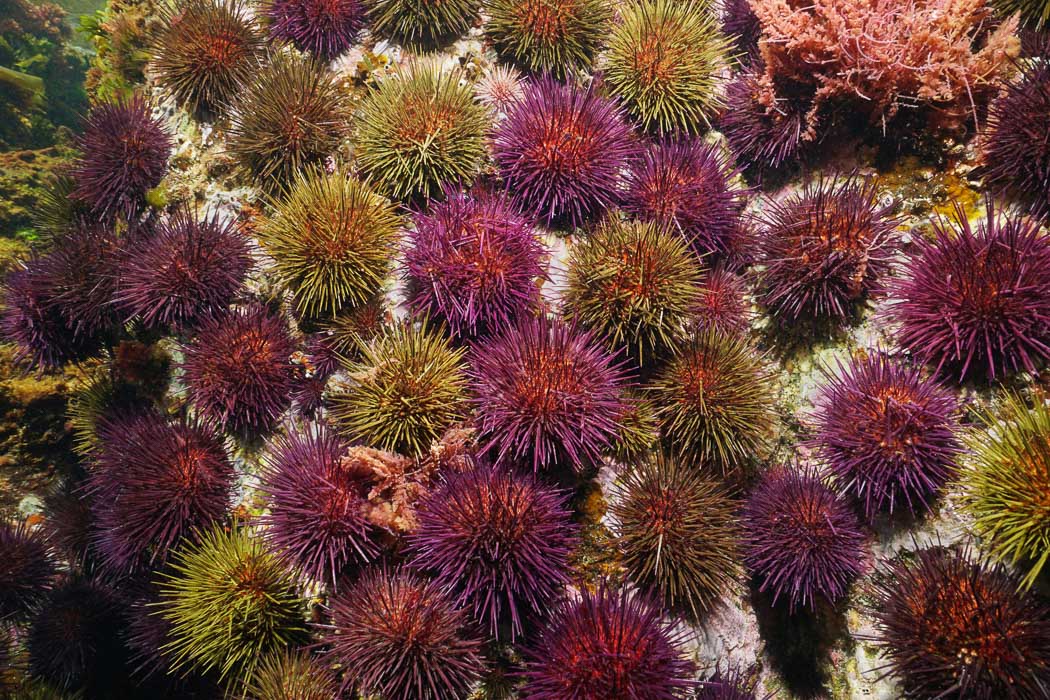
Paracentrotus lividus — The Edible Purple Sea Urchin
This is the famous Mediterranean edible sea urchin, often called the purple sea urchin. It is the species most associated with gastronomy in Greece, Italy, France, Spain, Malta, Croatia and other coastal cultures.
It lives mainly on rocky seabeds and seagrass meadows, especially in shallow coastal waters. Its color can vary from purple and dark violet to brown, olive green or reddish tones.
This is the sea urchin prized for its golden-orange gonads, commonly called “roe,” although technically they are not roe in the same way fish eggs are. They are the reproductive organs of the animal, and they are the edible part.
Arbacia lixula — The Black Sea Urchin
The black sea urchin is also common in the Mediterranean. It is darker, often almost black, with long sharp spines. Unlike Paracentrotus lividus, it is generally not considered edible.
Ecologically, however, it is extremely important. It grazes on algae and can strongly influence the balance of rocky reef communities.
Sphaerechinus granularis — The Violet Sea Urchin
This beautiful species is usually larger and more rounded, with shorter spines and a striking violet or pinkish appearance. It lives on rocky bottoms, seagrass beds and sandy areas with stones.
Although sometimes admired by divers for its color, it is not the classic sea urchin of Mediterranean cuisine.
Echinus esculentus — The European Edible Sea Urchin
Found mostly in the northeast Atlantic rather than the warmer Mediterranean, this larger species is known as the European edible sea urchin. It has a rounded body and pinkish-red tones and is part of the wider European sea urchin story.
Red and Green Sea Urchins
In colder waters, especially in the North Atlantic and Pacific, red and green sea urchins are also harvested. They are important in Japanese, North American and Nordic seafood traditions.
Japan’s famous uni culture has made sea urchin one of the world’s most desired luxury seafood ingredients.
Where Are Sea Urchins Found?
Sea urchins are native to oceans all over the world. Some live in very shallow tidal pools, while others inhabit deep-sea environments.
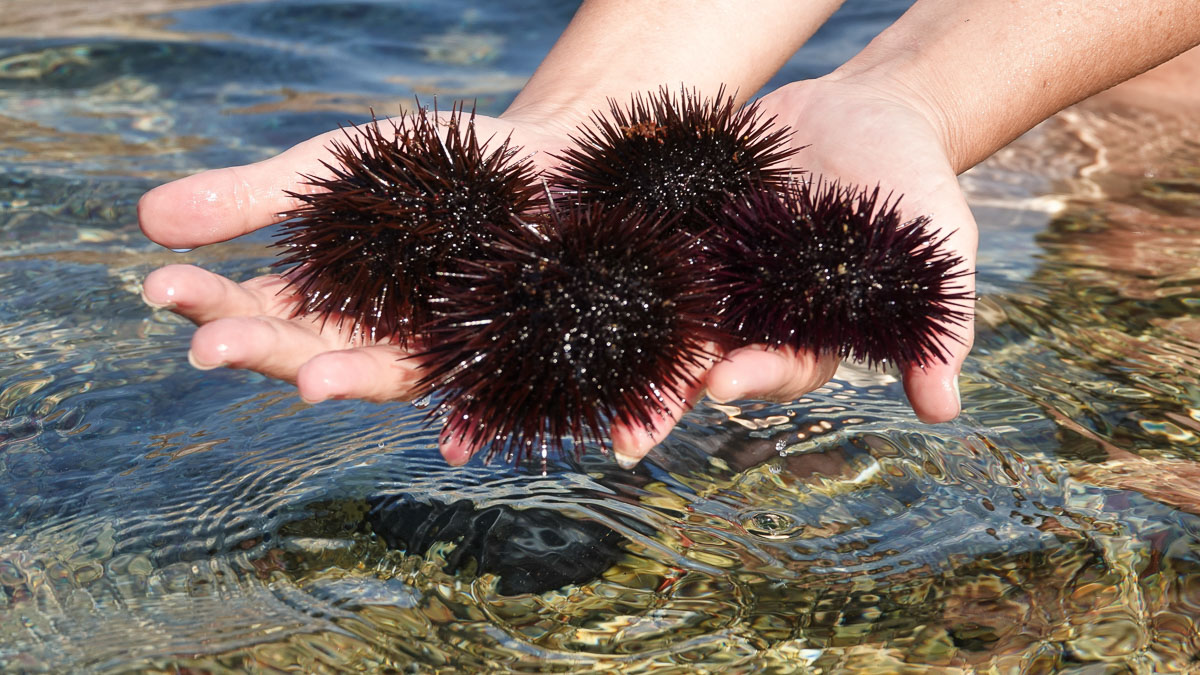
In the Mediterranean, you will find sea urchins in the following areas:
On rocky seabeds, around coastal reefs, near seagrass meadows such as Posidonia oceanica, in clean, shallow coves and around islands and coastal villages. They are also fond of areas with stones, crevices and underwater shelters.
In Greece, sea urchins are most commonly found on rocky beaches with crystal-clear waters. You will often find them on top of stones, hiding in cracks, or gathered in small colonies where the water is transparent and the seabed is full of life.
They are especially common in places with limestone rocks, small coves, and unspoiled coastal ecosystems.
Are Sea Urchins Really a Sign of Clean Water?
Many people in Greece and across the Mediterranean say: “If there are sea urchins, the water is clean.” There is some truth in this, but the full story is more nuanced.
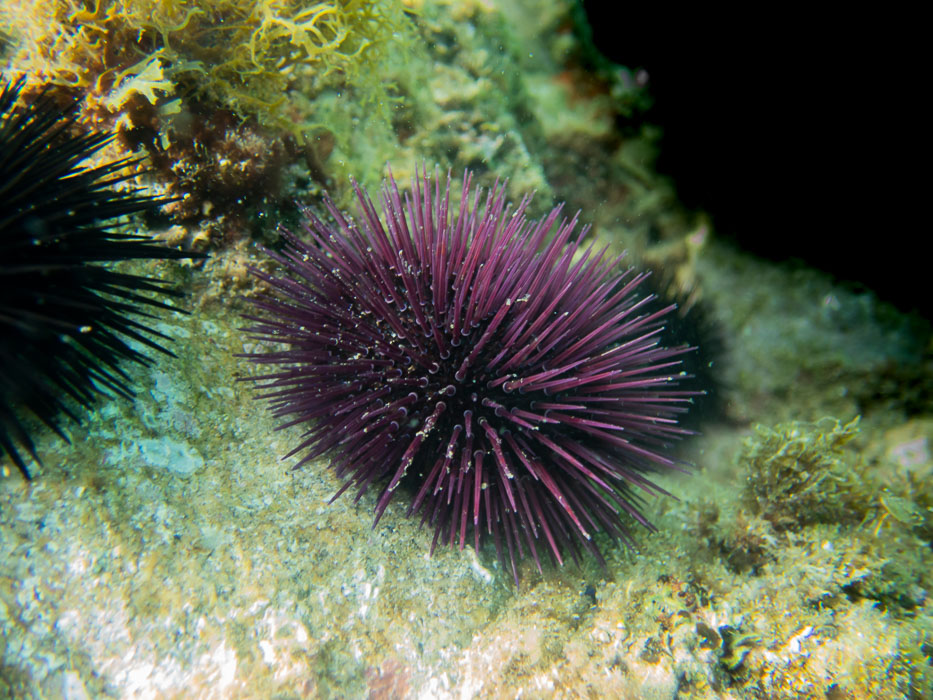
Sea urchins are fond of clear, oxygen-rich coastal waters, especially around rocky seabeds and healthy marine vegetation. Their presence often suggest that the area supports marine life and has suitable habitat.
However, sea urchins are not a simple “clean water certificate.” Some species can tolerate environmental stress, and certain sea urchins may even survive in polluted areas. Scientists use sea urchins and their embryos as bioindicators because they can reveal changes in water quality, toxicity and heavy metal contamination.
So the romantic version is partly true: sea urchins often belong to beautiful, clear marine landscapes. But the scientific version is more careful: they are indicators, not guarantees.
Although sea urchins often thrive in clear, unspoiled waters, scientists assess the health of a marine ecosystem through a much broader lens, examining biodiversity, seagrass meadows, fish populations, water quality, and the sustainable management of fisheries.
Sea Urchin in Mediterranean Gastronomy
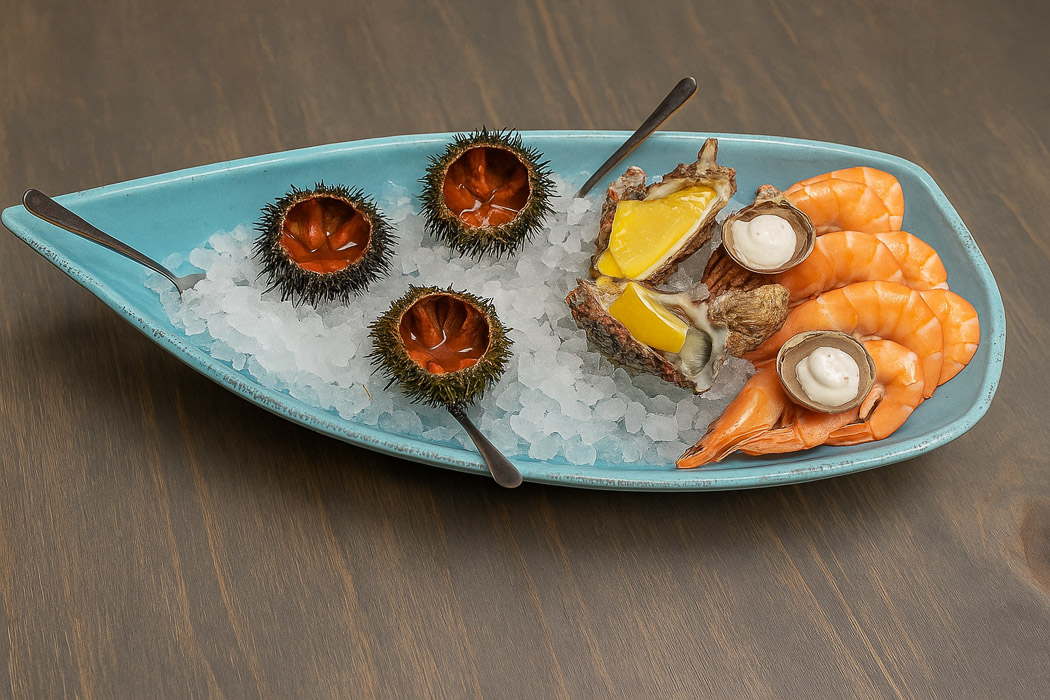
In Greece, sea urchins are often enjoyed raw, opened carefully and served with lemon and olive oil. The flavour is briny, creamy, mineral, slightly sweet and intensely marine.
In Greek island culture, sea urchins were traditionally gathered by hand from shallow waters and enjoyed simply, often as a meze with ouzo, tsipouro or wine. They are also associated with fasting periods, because seafood and shellfish are commonly eaten during Greek Orthodox fasting traditions.
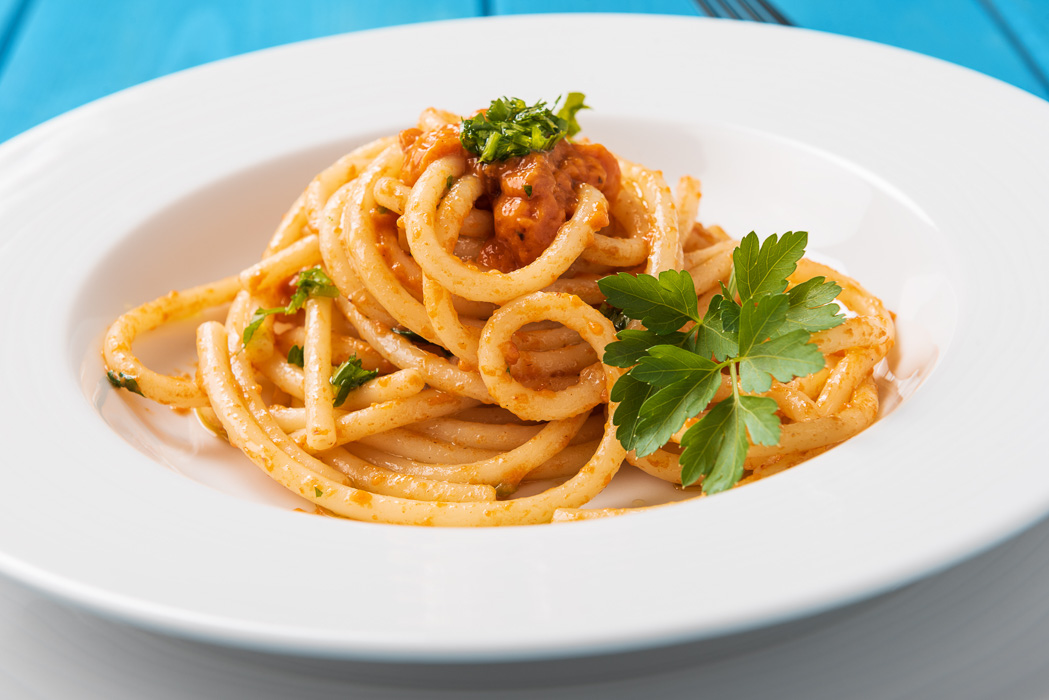
In Italy, especially in Sicily, Sardinia and Puglia, sea urchin is used in pasta. Spaghetti ai ricci di mare is one of the great coastal dishes of the Mediterranean: pasta, olive oil, garlic, parsley and fresh sea urchin added at the end so its delicate flavor remains alive.
In France, sea urchins are celebrated in the south, particularly in Provence and Corsica, where traditional sea urchin festivals are part of winter coastal culture.
In Japan, sea urchin becomes uni, served in sushi, sashimi, rice bowls and fine dining. There, it has become one of the world’s most luxurious seafood ingredients.
Sea Urchin Season
Sea urchin quality changes through the year because the edible gonads grow and shrink according to the reproductive cycle.
In many Mediterranean traditions, winter and early spring are considered a good period, when the sea urchins are fuller. Local sayings and customs often connect the best sea urchins with colder months, clean winter seas and even the moon. Almost like it is not just harvested but rather it is waited for.
Sustainability: A Delicacy That Needs Respect
Because sea urchins are valuable, they are vulnerable to overharvesting.
The edible purple sea urchin, Paracentrotus lividus, has faced pressure in parts of the Mediterranean. Some regions have experienced declining populations due to overfishing, climate change, warming seas, and habitat disturbance; as such, sea urchins should be eaten with respect, as they are not an unlimited resource.
Responsible gastronomy means asking where it comes from, avoiding illegal harvesting and respecting local regulations.
Sea Urchins in Greek Mythology and Ancient Thought
Sea urchins do not occupy mythology in the same dramatic way as dolphins, horses, eagles or snakes do. They also do not carry gods across the sea or appear as monsters in heroic battles. Their ancient importance comes through language, philosophy and observation.
The Greek word ekhinos connected the sea urchin with the hedgehog: two small creatures protected by spines, one on land and one in the sea.
Aristotle studied sea urchins and described their structure in his writings on animals. The famous term Aristotle’s lantern refers to the sea urchin’s jaw apparatus, a complex internal structure used for feeding. Although modern scholars believe the term may have come from a later interpretation of Aristotle’s description, the association remains one of the most beautiful links between ancient Greek science and the marine world.
The sea urchin also appears indirectly in place names, especially in western Greece.
Places Named After Sea Urchins
One of the most fascinating sea urchin connections in Greek geography is the Echinades Islands.
The Echinades are a group of small islands in the Ionian Sea, near the mouth of the Achelous River. Their name is believed to come from echinus, meaning sea urchin, because of their sharp, prickly outlines.
Ancient writers connected them with the alluvial deposits of the Achelous River, Greece’s largest river and the home of a mythological river god. Over time, river sediments shaped the coastline and changed the relationship between land and sea.
The Sea Urchin as a Symbol
The sea urchin is a creature of many contrasts. It is both dangerous and delicate. It is humble in appearance and luxurious on the plate. It also teaches us something about the Mediterranean itself.