
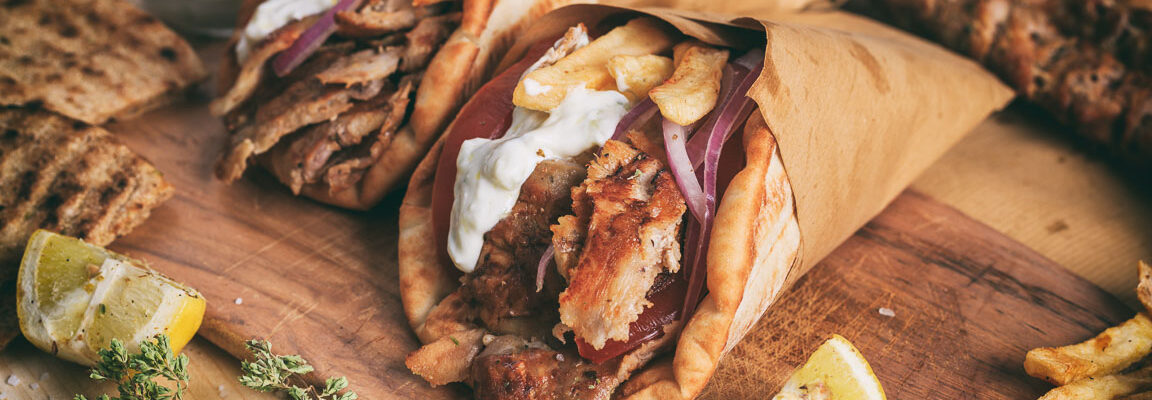
If you’ve ever been to Greece, you know souvlaki isn’t just a quick bite to eat—it’s a lasting part of everyday life. Ask anyone what the one thing I must try in Greece is, and souvlaki will most certainly be the answer.
Nothing says you’ve arrived in Greece quite like the smell of hot charcoal under the grill, dried oregano touching sizzling meat, a squeeze of fresh lemon, and warm pita waiting on the counter.
You might grab one on a lively street corner in central Athens, near a quiet village square, after a long night out with friends, or at a seaside taverna where the wooden tables are still warm from the sun.
So, how did a simple skewer of grilled meat turn into such an iconic national treasure? Let’s look at how this story of migration, clever cooks, charcoal fires, changing tastes, and Greek pride came together to create a staple Greek street food.
Long Before “Souvlaki,” They Were Grilling on Skewers
Long before anyone used the word souvlaki, archaeologists found evidence that cooking meat on spits over fire was already popular in the Aegean thousands of years ago. At Akrotiri on the island of Santorini, excavators unearthed Bronze Age stone supports made specifically to hold skewers over coals—dating to before the massive volcanic eruption of Thera in the 17th century BC.
In other words, the core trick behind souvlaki—small cuts of meat cooked over glowing coals on a stick—is ancient history in the truest sense!
Ancient literature gives us fun glimpses of this, too.
In Homer’s Iliad, heroes roast meat on spits, while classical writers like Aristophanes, Xenophon, and Aristotle mention similar skewers. They used the word obeliskos (meaning a small spit), which is a distant ancestor of today’s grilling jargon.
Now, don’t picture Achilles lining up for a pork wrap loaded with tzatziki, but the technique would have felt familiar to those ancient heroes.
The skewer is ancient, but the full souvlaki package we crave today came much later.
And that distinction makes the story clearer.
Taking the Skewer to the Modern Streets
Through Byzantine and Ottoman times, grilling meat on spits evolved into all kinds of tasty regional dishes.
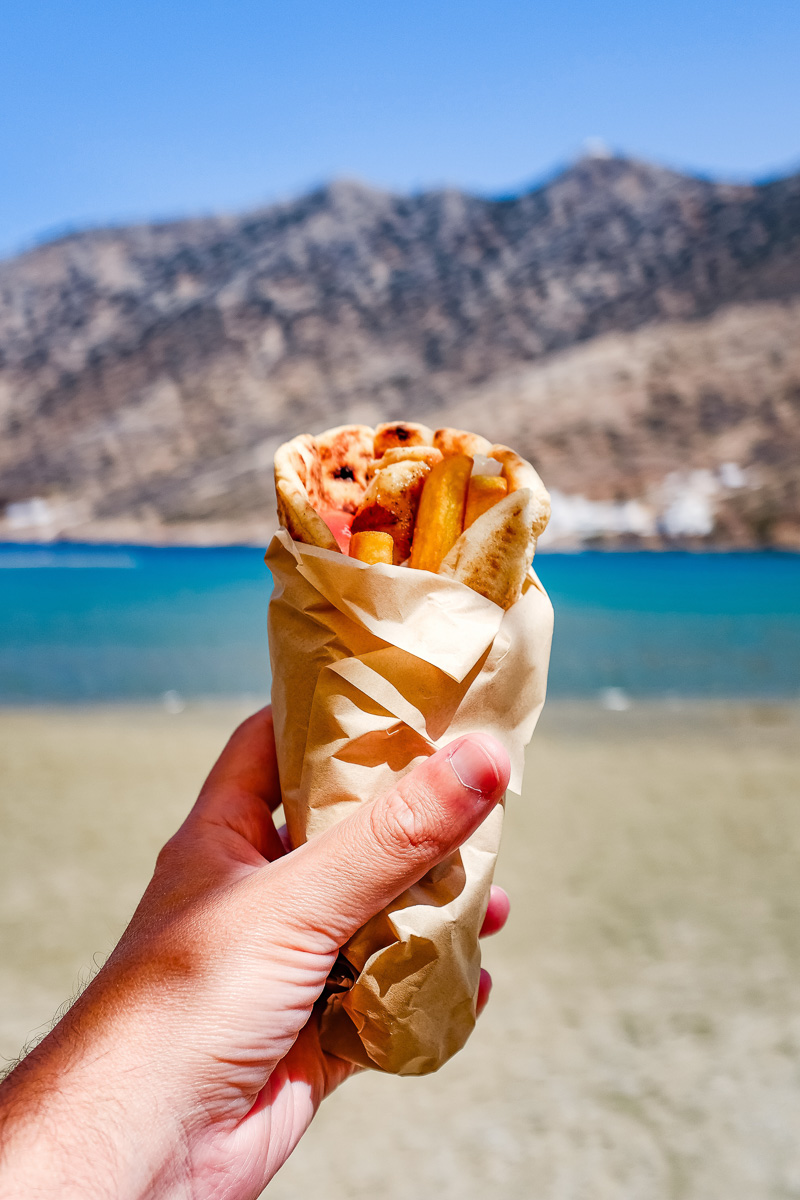
The eastern Mediterranean was a vibrant crossroads where skewered meats, kebabs, and flatbreads traveled across cities and cultures, blending techniques along the way.
This takes us to the most fascinating chapter of modern souvlaki.
Today’s favorite street food isn’t just an unchanged ancient recipe frozen in time.
It’s a living story shaped by real people and cultural exchange.
Following the Greco-Turkish War (1919-1922) and the 1923 population exchange, around 1.5 million Greek refugees from Asia Minor settled in Greece. As a result, they brought rich culinary traditions, especially expert techniques for spiced kebabs and grilled meats, forever transforming the country’s food scene.
In the bustling working-class neighborhoods around Athens and Piraeus, something magical began to happen.
Meet the Pioneer of Athenian Souvlaki
One key figure everyone points to is Isaak Meraklidis, a Greek-Armenian refugee who arrived from Adana.
In 1924, he opened To Aigyptiakon in Nikaia near Piraeus, serving mouthwatering grilled meats prepared using his homeland’s traditions. Many consider his shop one of the very first dedicated souvlaki spots in Greece.
It’s a neat piece of history because it shows that souvlaki isn’t just a museum piece—it’s proof that migration creates amazing new food cultures.
It came together through ancient Greek traditions, Asian Minor recipes, fresh local ingredients, and the fast-paced energy of growing cities.
And honestly, that tells you a lot about Greece itself.
It’s a story of welcoming new ideas and making them part of everyday life.
The Great Post-War Souvlaki Boom
Souvlaki really took off as a true street phenomenon in post-WWII Athens.
Athens was growing fast, neighborhoods were filling up, and people needed affordable, delicious, quick food on the go.
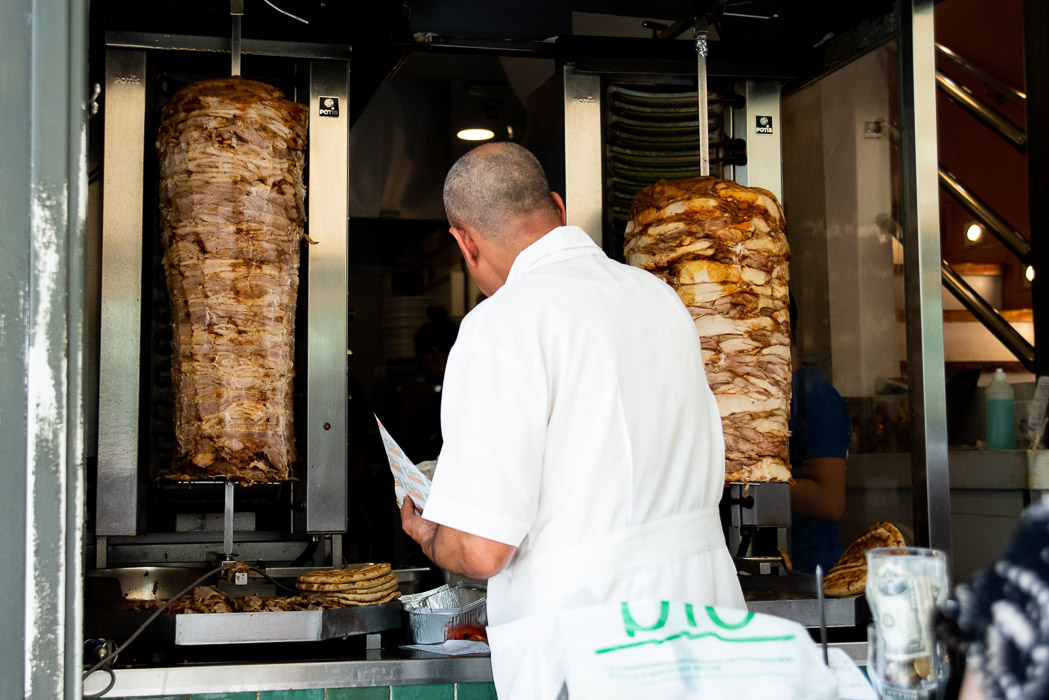
Tiny grill shops and street carts popped up everywhere to feed the city.
By the 1940s and 1950s, legendary spots appeared. Famous places like Kostas in Aghia Irini and Lefteris o Politis, started in 1951 by a family with roots in Constantinople, set the benchmark.
They created the classic scene we all know and love today:
A smoky grill radiating heat.
A line of eager locals chatting away.
Super-fresh ingredients.
And a master cook who knows the exact second to pull the skewer off the coals.
Just like that, the modern Greek souvlatzidiko became part of urban life.
Decoding the Word “Souvlaki” (And Avoiding Common Confusion!)
The word itself comes from souvla (spit or skewer), paired with the friendly little ending -aki, meaning “little skewer.”
Here’s a fun little secret for travelers to remember!
If you’re in Athens or southern Greece, ordering plain grilled meat on a stick means asking for a kalamaki.
It comes from kalami (reed), pointing to the traditional wooden stick.
So in Athens, if you want just the meat on a stick, “kalamaki” is the magic word.
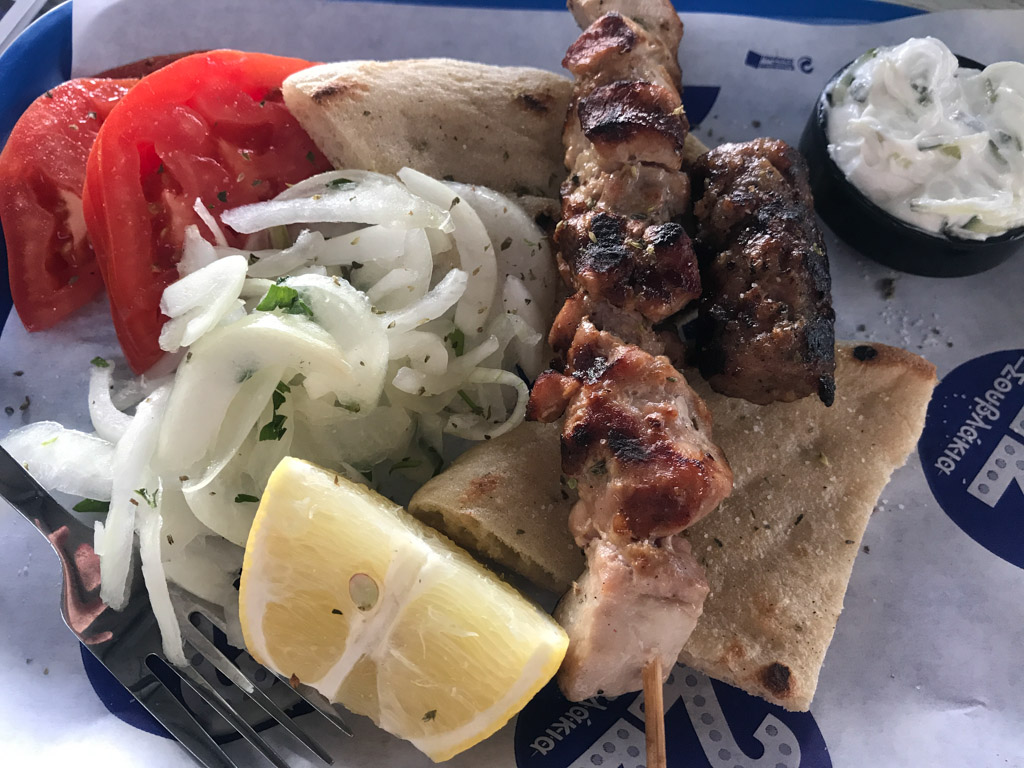 Head up north to Thessaloniki or to other parts of Greece, though, and that same skewer is called souvlaki.
It’s a friendly debate between Athenians and Northerners that may go on forever!
On a Stick vs. Wrapped in a Warm Pita
You can enjoy it in two main ways. First, the simple skewer: juicy pieces of meat (usually pork) on a stick, served straight with bread, dried oregano, salt, and half a lemon to squeeze over top.
Then there’s the famous tylichto—the full pita sandwich!
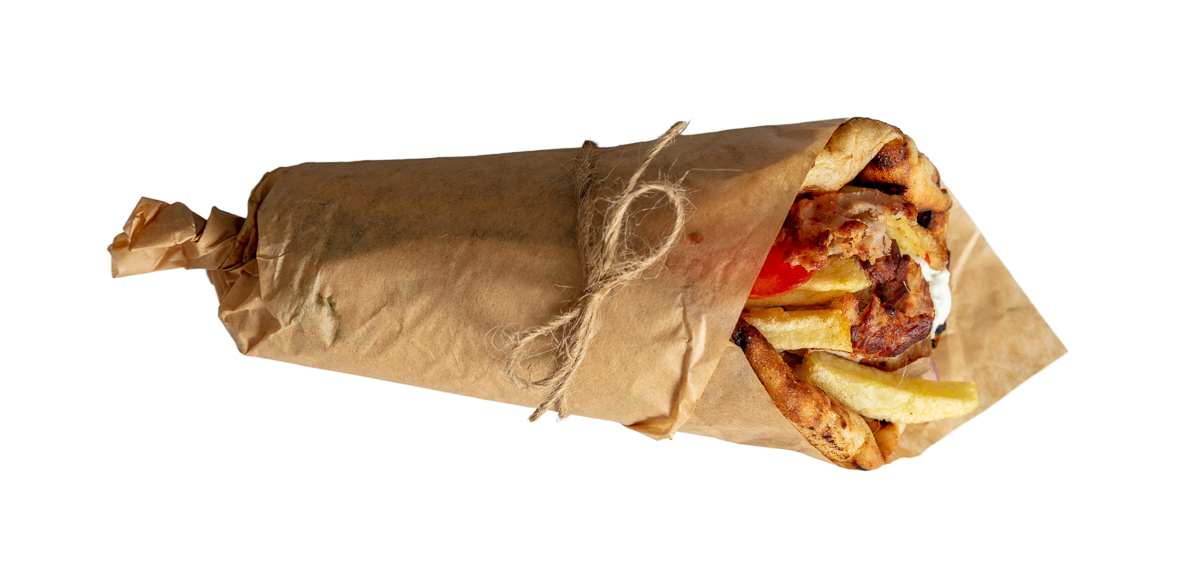
The grilled meat is wrapped inside fluffy pita bread alongside sliced tomatoes, onions, seasonings, and delicious sauces.
Interestingly, the modern pita wrap evolved.
Fresh tomatoes and onions became standard during the 20th century, while creamy tzatziki and crispy French fries inside the pita became hugely popular even later. Putting fries inside is actually a fairly recent addition!
So when you unwrap a classic pita souvlaki today, you’re enjoying a masterpiece perfected by generations of street-food innovation.
And honestly, if you ask us, that is what makes every bite feel extra special.
So, What’s the Difference Between Souvlaki and Gyros?
This is the number one question almost every traveler asks!
While they look similar tucked into pita, they aren’t the same thing.
Souvlaki uses bite-sized chunks of meat grilled on small individual skewers.
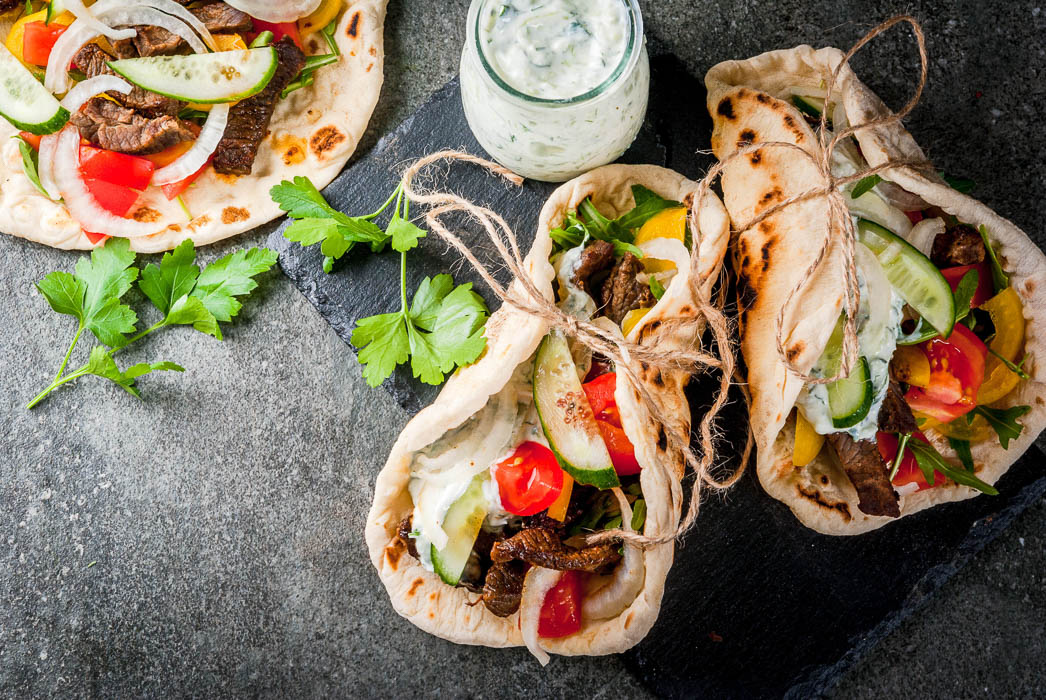 Gyros features meat stacked high on a tall, vertical rotating spit, carved into tender thin slices as it cooks. They share toppings, but their cooking techniques and textures are unique.
Gyros also hit its stride in 20th-century Greece, connected to eastern Mediterranean döner traditions.
While early variations leaned toward lamb or beef kebabs, pork gyros quickly became an absolute sensation across the country.
So when you glance at a menu seeing souvlaki, kalamaki, gyros, and kebab side-by-side, you’re looking at a more specific family tree of Mediterranean grilling!
Why Pork Is King (And the Magic of Lemon)
Though chicken, beef, and lamb are widely available, pork remains the undisputed classic choice for Greek souvlaki.
And there’s a clear reason for that.
Pork stays delightfully juicy over high heat, soaks up charcoal smokiness, and matches perfectly with wild oregano, onions, and ripe tomatoes.
Then comes the non-negotiable Greek secret weapon: the humble yet powerful lemon.
A quick squeeze of fresh lemon over sizzling meat brings everything together, cutting through the richness and making every flavor pop.
It’s such a simple trick, but it sums up Greek cuisine completely:
Simple ingredients, bring bold flavors with zero fuss. Pure perfection!
The Heart of Souvlaki: Bringing People Together
The best part of souvlaki history isn’t just about cooking technique or ancient finds. It’s about sharing it with people you love.
Souvlaki has always been affordable, easygoing, and open to everyone. It feeds hard workers after shifts, students between lectures, beachgoers taking a break from the sun, friends laughing late into the night, and travelers falling in love with Greece for the first time.
You don’t need a fancy reservation or special occasion.
In fact, it’s best enjoyed spontaneously.