
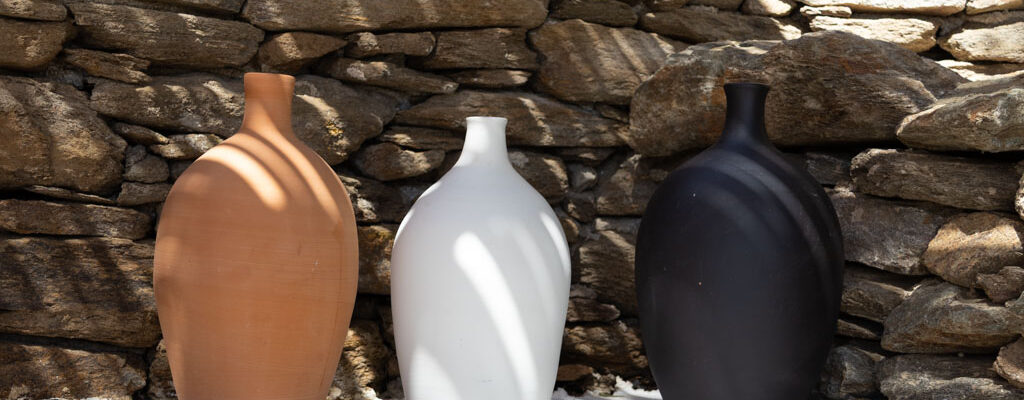
On the terraced slopes and quiet shores of Sifnos, an ancient rhythm of the turning of a potter’s wheel is gently present. On Sifnos, simplicity is a luxury. The unrushed elegance of everyday life is deeply rooted in the red clay that has shaped both the land and the people who work it.
This Cycladic island, beloved for its serene whitewashed villages and tranquil beaches that remain untouched by the masses, is a haven for seekers of authentic Greek hospitality – unpretentious and sincere. Sifnos also boasts a culinary tradition that has left its mark on Greece’s gastronomic identity. The food you’ll taste here is flavorful, locally sourced, and representative of the land.

Sifnos is also home to a vibrant ceramic heritage that stretches back millennia. Let’s discover what makes Sifnos so special and unique.
Clay and Civilization
The first pottery fragments found on Sifnos date back to the Middle Cycladic period (2000-1500 BC), marking a history that beautifully intertwines with the earliest expressions of human creativity in the Aegean. Through the centuries, Sifnian potters have transformed the island’s abundant red clay into indispensable tools of daily life—from storage jars and pitchers to the famed tsoukali and mastelo pots. They are used in traditional cooking to this day.
 At its height, the island’s pottery industry employed a large portion of the population. Entire families were involved, and specialized roles emerged: clay collectors (homatas), wood gatherers (kladas), and the master potter known as pasperetis. This communal rhythm turned clay into culture and work into artistry. Pottery was not only made for Sifnian homes but also exported widely—from the Cyclades to Attica, from the coasts of Asia Minor to as far as Calabria, where a marble inscription from the 2nd century BC praises the island’s ceramics.
From Mountain to Shore
In the past, potters would build their workshops inland to protect them from pirate raids during Ottoman times. However, with the establishment of the modern Greek state in the 19th century and the newfound safety, artisans relocated their kilns closer to the sea, thereby facilitating trade.
A fine example of such a workshop is that of Kostantinos Depastas in Cheronissos, the oldest potter on the island. In his tiny whitewashed studio right by the water, called “H Δύσκολη, the difficult one, he has created several patents which are like puzzles. No engineers or scientists could ever figure out how his utensils work. If you are lucky enough to meet Depastas yourself, you will find a humble man who found boundless inspiration from nature and proudly shares his craft.
The significance of this clay tradition is honored beyond the island. The names of neighborhoods and streets in Greece—such as “Sifneikos Aggioplaston” in Maroussi—celebrate the legacy of the migrating Sifnian potters who brought their craft to the mainland and beyond.

Today, fifteen workshops remain active on the island, producing both traditional utilitarian ware and contemporary art pieces. The iconic flaros, a decorative clay chimney ornament that adorns many homes and shops across the island, is characteristic of this timeless tradition. Other classic creations, such as the kouroupi (storage jar), tsikali (cooking pot), and braziers, reflect the practical beauty of Sifnian design.
Archipelago Network and the Sifnos Pottery Museum
Preserving this legacy for future generations is a collective effort. The Archipelago Network, a Greece-based organization we proudly support and have featured in a previous post, has launched an extensive documentation project on the pottery of Sifnos. In partnership with the Sifnos Potters’ Union and cultural institutions like the British School at Athens, Archipelago has created digital archives, video portraits of contemporary potters, and engaged artists in collaborative installations that link ancient techniques with modern expression.
 One of the most exciting developments is the creation of the Collection of Handmade Ceramics by Cosmas Xenakis, which is housed in the Sifnos Pottery Museum in the village of Artemonas. You can learn all about the visionary artist and architect who catalogued tools and pots during the 1960s to safeguard a fading craft. His work, along with archival films, photographs, and community interviews, breathes new life into a heritage which is at risk of being forgotten.
A Culinary Connection: The Taste of Land
It is no coincidence that an island so steeped in ceramics also gave birth to Greece’s first cookbook. Nicholas Tselementes, a native of Sifnos, revolutionized Greek cuisine in the 20th century with his legendary culinary guide. The island’s food traditions, which rely significantly on ceramic cooking vessels, continue to reflect his legacy.
The most quintessential dish is revithada, which you will find on many local menus, a slow-cooked chickpea stew baked overnight in a clay pot. Then there’s mastelo, tender lamb or goat braised with dill and wine, cooked in its namesake ceramic dish. Here, food is not just sustenance—it’s a local affair—an intimate dialogue between the land, the potter, and the cook.
 And no visit to Sifnos would be complete without a stop at Theodorou Pastry shop, housed in a traditional Cycladic house in Artemonas. For generations, this family-run gem has offered local delicacies, such as amygdalota (almond cookies), and pastelia (served at weddings, christenings, and festivals), that pair beautifully with an afternoon coffee in the heart of the village. Run by Vasilodimos and his 91-year-old mother Katerina, it is an experience not to be missed.
Quiet Luxury on Sifnos
A walk along the cobblestone streets of Sifnos is like wandering through a gallery without walls. Terraced hillsides, where goats still graze among herbs, lead to pristine beaches like Vathi and Faros, where time seems to pause.
 In Apollonia, ceramic pots overflow with bougainvillea and geraniums, while the scent of bread baking in wood-fired ovens blends with the sea air.
All this is the essence of quiet luxury: not extravagance, but depth. Not opulence, but soul.
Enjoy a memorable dinner in the most picturesque spot. Sifnos is known for its culinary artistry. To get there, you’ll descend 100 steps, with the majestic Kastro towering above and the gentle sound of waves crashing below—a setting where nature becomes part of the experience.
Sifnos invites you to touch the earth, savor the tradition, and meet the makers who transform humble clay into something timeless.