
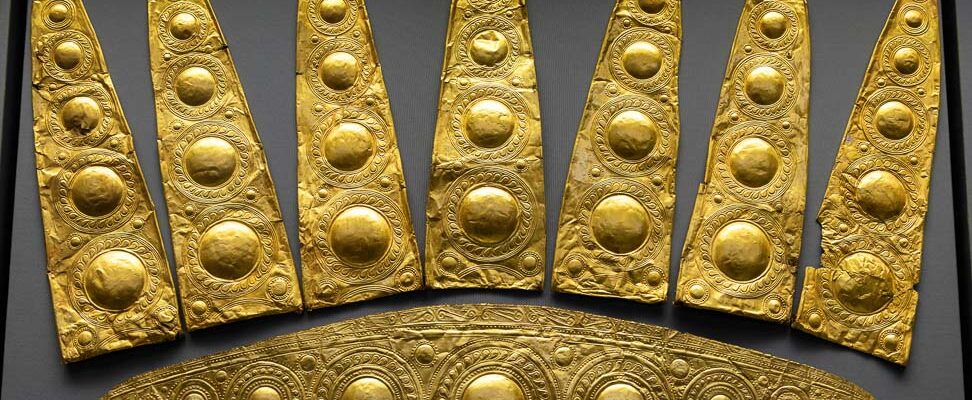
Filigree is a craft that has thrived through the millennia. This delicate art form consists of gold or silver twisted into the most intricate patterns. This ancient technique carries within it the patience of centuries, the skill of generations, and the soul of Greek artistry itself.
Filigree: A lace of metal and meaning
The term filigree — derived from the Latin filum (thread) and granum (grain) — perfectly describes the way artisans draw impossibly fine threads of precious metal and shape them into ornamental patterns, often enhanced with tiny beads. These are then soldered together to form intricate motifs that seem to breathe with movement and grace.
While often confused with ajouré work (where designs are cut or pierced into metal), filigree is sculpted — built up rather than carved away. It’s the difference between lace sewn by hand and lace cut from fabric.

Across centuries and continents, this art form has captivated civilizations — from Mesopotamia’s earliest goldsmiths to the Etruscans, Greeks, and later the Italians, French, and Portuguese, who perfected it from the 17th to the 19th century. Yet in Greece, filigree is not just a craft. It is a language of continuity, a luminous thread linking the ancient with the eternal.

Ancient origins
Archaeologists have discovered that artisans were already practicing filigree as early as 3,000 BC in Mesopotamia. The Greeks and Etruscans elevated it to breathtaking refinement between the 6th and 3rd centuries BC — creating jewelry that seemed spun from sunlight.
Their goldsmiths soldered together delicate wires to form spirals, rosettes, and palmettes — motifs of nature, geometry, and divinity. In contrast to the Egyptians, who favored cloisonné and molded ornaments, the Greek and Etruscan masters used filigree to express airiness and grace, the illusion of weightless gold.

You can witness these wonders in the National Archaeological Museum of Athens, where Mycenaean earrings glimmer beside Hellenistic diadems. The Benaki Museum of Greek Culture also showcases examples that trace the evolution of this art — from ancient adornments to pieces inspired by Byzantine faith and Ottoman finesse.
Further north, the Archaeological Museum of Thessaloniki houses the most impressive collection of gold wreaths and precious ornaments unearthed from the ancient cemeteries of Macedonia. This region was renowned in antiquity for its wealth of metals — gold from the river Echedorus (today’s Gallikos) and mineral deposits from Mount Pangaion and Dysoron.
Macedonian metalworking thrived twice in history: first during the late Archaic and early Classical periods, and later during the transition from the Classical to the Hellenistic age. The skill of its craftsmen is astonishing — their creations, often formed using filigree and granulation, display both artistic grace and technical mastery.

Byzantine brilliance and Ottoman legacy
During the Byzantine Empire, jewelry making achieved spiritual symbolism. Filigree was often combined with enamelling and gemstones to craft crosses, icons, and imperial ornaments that shimmered with divine light — small sanctuaries of faith worn close to the heart.
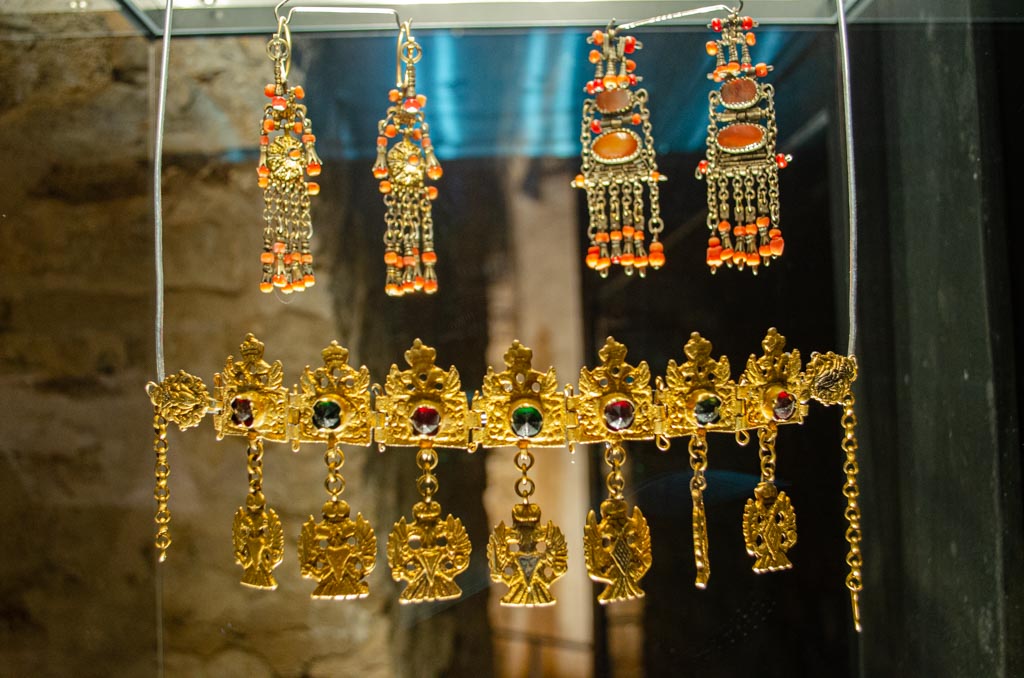 Later, under Ottoman influence, Greek silversmiths — especially in Ioannina, Metsovo, and Kozani — refined silver filigree to extraordinary levels of delicacy and sophistication. The city of Ioannina, in particular, became synonymous with the argyrochrysochoi, the master silversmiths whose art adorned bridal jewelry, belts, and ecclesiastical treasures. Their motifs — flowers, birds, spirals, and endless knots — were not mere embellishments; they carried symbolic blessings of protection, prosperity, and love.
Today, the legacy of these artisans lives on in the Silversmithing Museum of Ioannina, housed within the city’s historic castle. This beautifully curated museum offers an immersive journey through the techniques, tools, and traditions of Epirus’ famed craftsmen — a tribute to a skill that defined an era and shaped Greek cultural identity.
Interestingly, it is from this very region that the Bulgari family, founders of the iconic jewelry house BVLGARI, trace their origins. Sotirios Voulgaris, born in the Epirus village of Paramythia, left Greece in the late 19th century to establish his name in Rome — carrying with him the legacy of Greek craftsmanship that would go on to conquer the world of luxury jewelry.
Symbolism woven in silver and gold
In Greece, people have always worn jewelry not only for its beauty but for its meaning — they saw gold as a symbol of divine light and wealth, and silver as a shield against evil. Every region developed its own motifs — from the heart-shaped skeparniko of Epirus brides to the delicate pendants of the Dodecanese.
Filigree thus became a silent storyteller of life’s milestones — baptisms, weddings, and festivals. It preserved memory and emotion in metal, embodying the belief that beauty protects, and artistry endures.

Lalaounis: the modern echo of an ancient art
For those who wish to experience the journey of Greek jewelry in greater depth, the Ilias Lalaounis Jewelry Museum, set at the foot of the Acropolis, is a must-visit.
Founded in 1994 within the original workshops of the legendary goldsmith, it remains the only museum of its kind in Greece — a place where ancient craftsmanship meets contemporary art. Here, Ilias Lalaounis designed over 80,000 pieces and supervised the creation of more than 18,000 jewels and decorative objects, reimagining Greek mythology, nature, and history through the brilliance of gold.
In the Permanent Collections, visitors can trace the life’s work of the artist across six sections that showcase 4,500 original pieces, crafted between 1957 and 2002. These jewels and microsculptures, exhibited worldwide, reflect his revival of ancient goldsmithing techniques and his mastery in shaping new forms for a modern audience. Recognized internationally, Ilias Lalaounis was instrumental in restoring the global appreciation for yellow gold jewelry. This contribution earned him the distinguished title of Academician of the Académie des Beaux-Arts in Paris in 1990.
Guided today by his daughter Ioanna Lalaouni, the museum continues to honor his vision — a living tribute to Greek artistry and a testament to how jewelry, when born from culture, becomes a timeless expression of the human spirit.
A craft that endures
To hold a piece of Greek filigree is to have history made tangible. The art of filigree continues to remind us that even the most delicate things can last forever.